How to Choose the Right Sauna Heater for Your Home Sauna
- 19 Mar, 2026
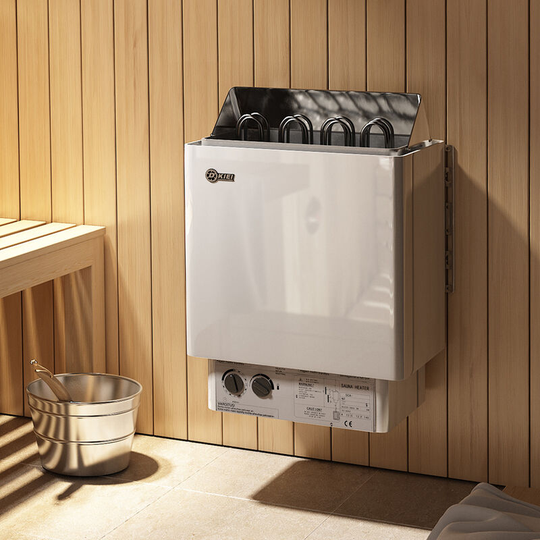
The heater is the heart of any sauna. You can have beautiful benches, a glass door and soft lighting, but if the heater is the wrong size or badly placed, the room will never feel quite right. Whether you are building a new sauna room or replacing an old stove, a little planning goes a long way. Here is what to think about before you buy.
Match the Heater to the Size of Your Sauna
Sauna heaters are rated in kilowatts (kW), and every manufacturer gives a recommended room volume for each model. The key is to measure the volume of your sauna, not just the floor area. Multiply length by width by height to get the volume in cubic metres.
A few things change how much power you need:
- Glass: a glass door or window loses more heat than an insulated timber wall, so many manufacturers suggest allowing extra volume for it.
- Uninsulated surfaces: stone, tile or concrete walls take longer to warm up and need more power.
- Location: a sauna in a cold outbuilding or garage needs more from its heater than one inside a warm house.
A heater that is too small will struggle to reach temperature and run for long periods. One that is far too large can make the air feel harsh and cycle on and off. Always check the volume range in the product details and pick the model that fits your room comfortably within it. You can compare options in our sauna heaters range.
Built-in Control or External Controller?
Electric sauna heaters usually come in two styles. A heater with built-in control has the thermostat and timer dials on the unit itself. It is simple, often more affordable and a good fit for smaller home saunas where you can easily reach the heater.
A heater with an outer controller places the control panel outside the sauna or on a wall away from the stove. This means you can switch it on and set the temperature without stepping into a hot room, and the panel is usually easier to read. It suits larger saunas and households where several people use the sauna and like different settings.
Stones, Placement and Installation
The stones do much of the work. They store heat and release steam when you pour water over them, which is what gives a sauna its soft, enveloping warmth. Use stones made for sauna heaters, as ordinary rocks can crack under repeated heating and cooling. Load them loosely so air can flow between them, and check them once or twice a year. Replace any that have crumbled. If you need a fresh supply, sauna heating stones are sold by weight so you can fill the basket properly.
When it comes to placement and installation, keep these points in mind:
- Follow the safety distances in the heater manual for walls, ceiling and benches.
- Fit a heater guard if the stove sits close to where people sit or walk.
- Most electric sauna heaters need a dedicated circuit, so have the installation done by a qualified electrician.
- Make sure the room has an air inlet and outlet so the air stays fresh during a session.
Looking After Your Heater
A sauna heater needs very little maintenance, but a few habits help it last. Let the sauna dry out after each use by leaving the door ajar once the heater is off. Wipe the outer casing occasionally with a dry cloth, and never cover the heater with towels or clothes to dry them. If the heater is slow to warm up or the elements look damaged, stop using it and have it checked.
Choosing a heater is mostly about getting the size right, deciding where you want the controls and installing it safely. Get those three things right and your home sauna will be ready for relaxing evenings all year round. Browse our full selection of sauna supplies to complete your setup.