
How to Dry Clothes Indoors in Winter Without Making Your Home Damp
- 14 Nov, 2026
From November to March the washing line is mostly decoration, so laundry ends up on airers, radiators and the backs of chairs. That water has to go somewhere, and in a closed, heated home it goes into the air and then onto the coldest surfaces: windows, outside walls and the back of the wardrobe. The good news is that a few changes to where and how you dry clothes make a big difference, and most of them cost nothing.
Why Indoor Drying Causes Damp
A study by the Mackintosh School of Architecture at the Glasgow School of Art found that an average load of washing releases around 2 litres of moisture into the air as it dries. In poorly ventilated rooms, laundry drying on radiators could account for up to a third of the moisture in the air.
Two litres is roughly a large bottle of water evaporated into your living room, several times a week. When warm, moist air meets a cold window or an outside wall, it condenses. Do that all winter and you get the familiar signs: streaming windows in the morning, black spots in the corners of bedrooms and towels that never smell quite fresh.
The aim, then, is simple. Get as much water out of the clothes before they come out of the machine, dry them in one controlled place rather than all over the house, and remove the moisture from that room instead of letting it spread.
Start in the Washing Machine
The easiest water to deal with is the water that never reaches the airer. Use the fastest spin your fabrics can take. Cottons, towels and bedding are usually fine on the machine's top spin speed, while delicates and synthetics need a gentler setting, so check the care labels. A faster final spin leaves clothes noticeably lighter, and they dry in fewer hours.
If your machine has an extra spin or "spin only" programme, it is worth running it on heavy items such as jeans, hoodies and bath towels. A clean, well maintained machine also drains and spins more effectively, so it pays to clear the drain pump filter every few months and keep the drum and door seal clean.
When you replace a machine, look at the spin-drying efficiency class on the energy label. It tells you how much water the machine leaves in a load after the spin, and a better class means less moisture to remove later.
Where to Put the Airer
Choose one room for drying and treat it as the drying room for the day. The best options, in rough order:
- A bathroom or utility room with an extractor fan. Close the door, leave the fan running and open the window a crack if the weather allows.
- A spare bedroom or a room you can shut off. Keep the door closed so the moisture does not drift into the rest of the house, and ventilate or run a dehumidifier in that room.
- A bright room near a south facing window. Even winter sunlight speeds up drying, which is why the Glasgow researchers suggested drying by south facing windows where possible.
Avoid bedrooms you sleep in, and avoid draping clothes directly on radiators. Wet clothes on a radiator block the heat from reaching the room, so the heating works harder, and they push a lot of moisture into the air very quickly. If you want a little warmth, place the airer a short distance from the radiator so warm air rises through it.
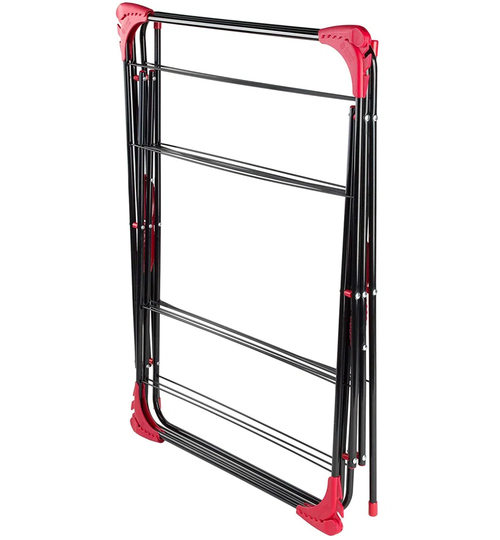
A tall, freestanding airer with several tiers, such as this foldable three tier clothes airer, takes a full load in a small footprint and folds flat afterwards. Leave a few centimetres between items: air needs to move around each piece, and clothes pressed together stay damp where they touch.
Small Habits That Cut Drying Time
- Shake each item out before hanging. Creases hold water and take longest to dry.
- Hang heavy items on the top tier, where the air is warmest, and small items lower down.
- Turn thick items inside out halfway through, especially jeans and hoodies with pockets and seams.
- Use hangers for shirts and dresses. They dry faster with air on both sides and need less ironing.
- Do smaller loads more often if you have limited space, rather than one huge load that sits damp for two days.
- Wash early in the day so clothes have the warmest, driest hours of the day and are done before evening.
If anything is still damp after 24 hours, it will start to smell. Move it somewhere with better airflow or finish it in a dryer rather than leaving it.
Dehumidifier, Tumble Dryer or Heated Airer?
Ventilation alone is often not enough in a cold, still winter. Opening a window in freezing weather loses heat, and many homes simply do not have a spare room. These are the three common ways to deal with the extra moisture, and which one suits which home:
| Option | How it helps | Best for | Watch out for |
|---|---|---|---|
| Dehumidifier | Pulls the water from the clothes out of the room air and into a tank | Homes that already dry on airers and see condensation | Needs a closed room and an emptied tank to work well |
| Heat pump tumble dryer | Dries in a sealed drum and collects the water, so nothing goes into the room | Families with daily loads and little space | Higher purchase price, longer cycles than older dryers |
| Condenser or vented dryer | Fast drying with higher heat | Occasional use, or a vented model fitted to an outside wall | Uses more electricity per load; a vented dryer must vent outdoors |
| Heated airer | Gentle warmth speeds up drying on the rack | Small loads in a ventilated room | The moisture still goes into the room |
For most people who already dry on airers, the cheapest step that makes a real difference is a dehumidifier in the drying room. Many models have a laundry mode that runs the fan harder, and with the door closed you can usually see the tank filling with the water that would otherwise end up on your windows. Our dehumidifier buying guide explains the difference between compressor and desiccant models and what size to choose for the room.
If you are replacing a tumble dryer, a heat pump model is usually the efficient choice. It dries at lower temperatures and recycles the warm air, and the difference shows on the energy label: one comparison by Homebuilding and Renovating put a heat pump model at around 235 kWh a year against 560 kWh for a condenser model. Check the annual kWh figure on the label of any dryer you compare. You will find heat pump, condenser and vented models in our tumble dryer category.
For a heated airer, the cost is easy to work out yourself. Multiply its wattage by the hours it runs: a 300 W airer running for four hours uses 1.2 kWh. Then multiply by your electricity unit rate from your bill.
Common Questions
Is it bad to dry clothes on radiators?
Occasionally drying a few small items is not a problem, but doing it all winter puts a lot of moisture into the room at once and reduces the heat the radiator gives out. An airer near the radiator, in a ventilated room, is a better habit.
How do I stop clothes smelling musty when dried indoors?
Musty smells come from clothes staying damp too long. Spin harder, space items out, dry in a room with airflow or a dehumidifier, and make sure the washing machine itself is clean, since a dirty drum or door seal can pass smells onto the laundry.
What humidity should I aim for?
Somewhere around 40 to 60 percent relative humidity is a common target indoors. A cheap digital hygrometer in the drying room tells you quickly whether your routine is working.
Set Up Your Drying Corner This Week
Pick the room you will dry in, put a hygrometer in it and run your next load on the fastest safe spin. Watch the reading and the windows for a week. If the humidity stays high or the glass is wet every morning, that is the point to add a dehumidifier or plan for a heat pump dryer, rather than living with damp until spring.